APPLICATIONS
APPLICATIONS
Desalination units for operations requiring a reliable source of fresh water: boutique coastal hotels, eco-resorts, coastal farms, greenhouses, coastal construction site, small islands, science coastal camps.
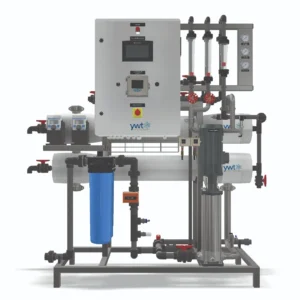
YWT SWRO System 3 m³/h is an industrial seawater reverse osmosis system engineered for reliable and efficient desalination. Built with industrial grade components and automated process control, it delivers consistent freshwater production for professional and industrial water treatment applications.
A stable company with extensive experience in the water industry.
We develop high-quality products at competitive prices.
Delivering advanced solutions backed by knowledge, innovation, and industry expertise.
PHYSICAL PARAMETERS
Approximate dimensions (bare): 2.1 × 1.0 × 1.90 m
Approximate dimensions (crated): 2.30 × 1.20 × 2.0 m
Dimensions: Width × Depth × Height, ±5%
Approximate weight (bare): 370 kg
Approximate weight (crated): 480 kg
Maximum Power Consumption: 15,650 W
CONNECTION PORT SIZES
Inlet water: G 1½″
Permeate: G 1½″
Concentrate: G 1″
CIP inlet: G 1½″
CIP return: G 1½″
CIP permeate: G 1½″
Antiscalant dosing port: G ½″
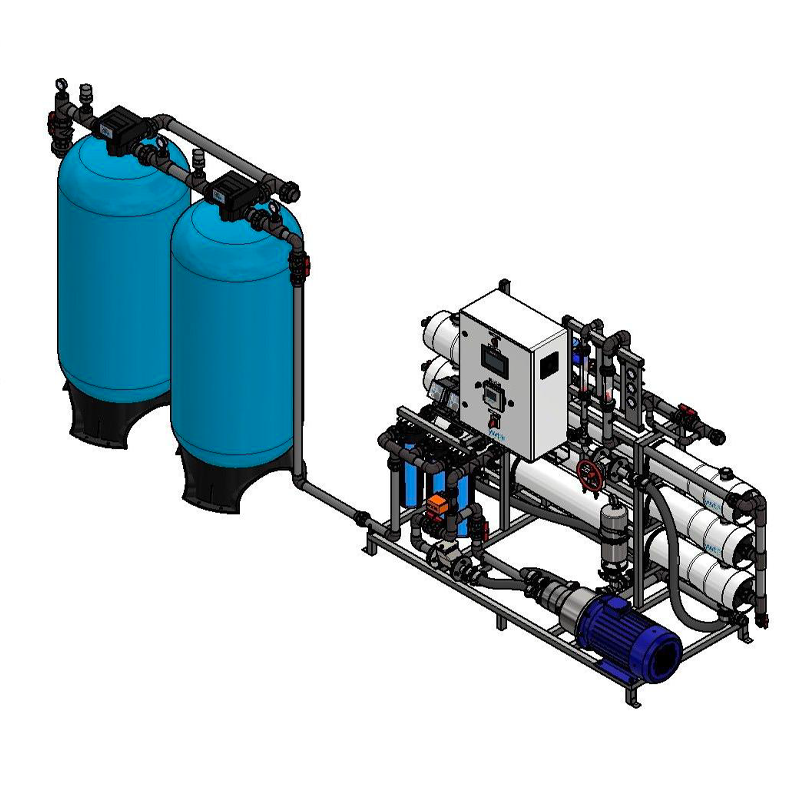
is an industrial seawater reverse osmosis system designed for reliable freshwater production through advanced membrane desalination technology. With a nominal production capacity of 3 m³/h, the system provides an efficient solution for professional seawater desalination and industrial water treatment applications requiring dependable operation and a practical installation footprint. Its physical configuration supports integration into industrial water treatment facilities, while dedicated connections for inlet water, permeate and concentrate provide the principal process interfaces required for continuous reverse osmosis operation. Separate CIP inlet, return and permeate connections support membrane cleaning and scheduled maintenance procedures, while the dedicated antiscalant dosing port enables integration of chemical dosing into the SWRO process. With a maximum power consumption of 15,650 W, the system provides clearly defined electrical requirements for engineering and installation planning. As part of YWT’s range of industrial reverse osmosis systems, the SWRO System 3 m³/h combines compact construction, professional process connections and industrial desalination technology for applications requiring reliable treatment of seawater and consistent freshwater production.
EQUIPMENT
Danfoss high pressure pump APP 7.2: 1 pc
8040 2 membrane housing: 3 pcs
BB20 sediment prefilter: 3 pcs
Motorized valve: 1 pc
Balancing valve for concentrate reject: 1 pc
Pulsation dampener: 1 pc
Electrical panel with Unitronics PLC controller: 1 set
ABB conductivity controller: 1 set, pH option available
Danfoss pressure switches: 2 pcs
AISI 316 stainless steel high pressure line: 1 set
AISI 304 stainless steel frame: 1 set
Grundfos dosing pump: 1 set, option for 2 sets
is built with industrial grade components selected for dependable operation in demanding seawater reverse osmosis and desalination applications. A Danfoss APP 7.2 high pressure pump supplies the pressure required for membrane separation, while three 8040 membrane housings form the core of the reverse osmosis treatment stage. BB20 sediment prefilters support feed water pretreatment, and the Grundfos dosing pump provides controlled antiscalant dosing to support stable RO operation. System management is handled through a Unitronics PLC controller, supported by ABB conductivity monitoring, Danfoss pressure switches, motorized flow control and concentrate regulation. The high pressure process line is manufactured from AISI 316 stainless steel, while the complete industrial reverse osmosis system is assembled on a robust AISI 304 stainless steel frame. Together, these components provide a professional SWRO configuration designed for reliable process control, efficient seawater desalination and consistent freshwater production in industrial water treatment applications.
SOURCE WATER CONDITIONS
Water source: Seawater
Pretreatment: Required according to source water quality
Suspended solids: Must be controlled through appropriate pretreatment
Turbidity: Should be reduced before entering the RO membrane stage
Scaling potential: Must be evaluated and controlled
Antiscalant dosing: Required according to feed water composition and operating conditions
Feed water analysis: Recommended before installation and commissioning
Biological contamination: Pretreatment may be required depending on source water conditions
Chemical compatibility: Feed water must remain within the operating limits of the RO membranes and system components
Source water quality has a direct influence on the efficiency, reliability and operating life of the YWT SWRO System 3 m³/h. Before seawater enters the reverse osmosis system, its physical, chemical and biological characteristics should be evaluated to determine the appropriate pretreatment and chemical dosing requirements. Factors including salinity, suspended solids, turbidity, scaling potential, biological activity and chemical composition can affect membrane fouling, operating pressure, salt rejection, permeate quality and overall desalination performance. Effective pretreatment and correct antiscalant dosing help protect the reverse osmosis membranes, high pressure pump and other critical system components while supporting stable freshwater production. A professional source water analysis is therefore recommended when planning an industrial seawater reverse osmosis system, allowing the pretreatment process and operating conditions to be established for reliable seawater desalination and industrial water treatment.
ROUTINE SERVICE REQUIREMENTS
Sediment prefilters:
Inspect regularly and replace when differential pressure increases or filter condition indicates reduced flow or performance.
RO membranes:
Monitor permeate flow, conductivity, salt rejection and operating pressure. Clean the membranes when normalized performance declines and replace them when cleaning can no longer restore the required performance.
High pressure pump:
Inspect periodically for leakage, abnormal noise, vibration and changes in operating pressure. Service according to the pump manufacturer’s recommendations.
Antiscalant dosing system:
Check chemical levels, dosing rate, tubing and injection points regularly to maintain correct chemical dosing.
Conductivity monitoring:
Check conductivity readings routinely to verify permeate water quality and identify changes in reverse osmosis performance.
Pressure switches and valves:
Inspect periodically for correct operation, stable pressure control and leakage.
CIP membrane cleaning:
Perform cleaning when operating data indicates membrane fouling, scaling or a significant decline in normalized flow or salt rejection.
Stainless steel piping and connections:
Inspect for leakage, corrosion, loose fittings and signs of mechanical wear.
PLC and electrical panel:
Check system alarms, control functions, operating parameters and electrical connections as part of scheduled preventive maintenance.
Regular servicing and preventive maintenance are essential for maintaining the efficiency, reliability and operating life of the YWT SWRO System 3 m³/h. Because an industrial seawater reverse osmosis system operates with high salinity feed water and elevated operating pressures, the condition of the RO membranes, high pressure pump, prefilters, dosing equipment and process instrumentation should be monitored routinely. Tracking operating pressure, permeate flow, conductivity and salt rejection helps identify membrane fouling, scaling, filter blockage or other changes in system performance before they result in significant production losses. Correct antiscalant dosing and timely CIP membrane cleaning help maintain membrane performance and support consistent freshwater production. A structured maintenance program allows the industrial reverse osmosis system to operate efficiently, maintain the required permeate quality and reduce unnecessary downtime while supporting the long term reliability of the seawater desalination equipment.
Approximate dimensions (bare) 2.1 ×1.0 ×1.90 m
Approximate dimensions (crated) 2.30 ×1.20 ×2.0 m
(Width ×Depth ×Height, ±5%)
Approximate weight (bare) 370 kg
Approximate weight (crated) 480 kg
Maximum Power Consumption 15 650 W
• Danfosshigh pressure pump APP 7.2 1 pcs
• 8040-2 membrane housing 3 pcs
• BB20 sediment prefilter 3 pcs
• Motorized valves 1 pcs
• Balancing valve (concentrate reject) 1 pcs
• Pulsation Dampener 1 pcs
• Electrical panel with PLC Unitronicscontroller 1 set
• ABB conductivity controller 1 set (pH option)
• Danfoss pressure switches 2 pcs
• AISI 316 Stainless-steel high-pressure line 1 set
• AISI 304 Stainless steel frame 1 set
• Grundfos dosing pump 1 set (option for 2 sets)
Inlet water G 1½″
Permeate G 1½″
Concentrate G 1″
CIP inlet G 1½″
CIP return G 1½″
CIP permeate G 1½″
Antiscalant dosing port G ½″